Long Term Athlete Development
Active Start
Learn to Train
Active Start

- "Make activity FUN and part of the child’s daily routine.
- Activity and movement skills development
- Focus on developing locomotor, object manipulation and balance skills on land, water, ice/snow and in the air in a variety of movements.
- Meet the 24-hour movement guidelines for young children of being active for 180 minutes/day."
FUNdamentals
Learn to Train
Active Start
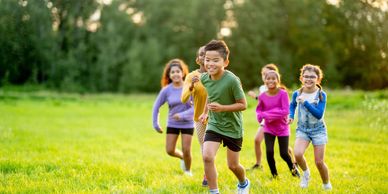
- "Develop fundamental movement skills, with emphasis on participation and having FUN on a daily basis.
- Emphasize activities that develop agility, balance, coordination and speed – The ABCs. The building blocks for Canadians to move more.
- Encourage running, jumping wheeling, throwing and catching, as well as swimming, and activities on ice and snow."
Learn to Train
Learn to Train

- "Brain and body primed for skill acquisition.
- Build fundamental skills in a wide range of sports and activities—on the ground, in water, in air and on ice/snow—before entering Train to Train stage.
- Ensure environment promotes and supports fun and friendship.
- Avoid early over-specialization.
- Take into account individuals’ variations in physical, psychological, cognitive, emotional, and moral development."
Train to Train

- "A critical stage in the development of high performance athletes. During this stage participants typically: commit to high performance and begin their journey on their sport’s Podium Pathway, or enter Competitive for Life or Fit for Life in their sport or sports of choice
- Build ancillary capacities and sport-life
- Build ancillary capacities and sport-life balance. balance.
- Introduce free weights with emphasis on correct technique.
- Develop ethical approach to sport including respect for opponents and fair play and commitment to dopingfree sport."
Train to Compete
Train to Compete

- The stage for specialization in sport, position or event
- "Test tactics and practice under competitive conditions.
- Evidence-based training built on testing to identify strengths and weaknesses.
- Optimize ancillary capacities, and balance sport, work/school, and family/friend life obligations.
- Advanced mental preparation, and practice under highly competitive conditions.
- Strengthen ethical approach to sport including respect for opponents, fair play, and commitment to doping-free sport.
- Single, double or triple periodization."
Train to Win
Train to Compete

- "Focus is on podium performances at highest level international events.
- Frequent prophylactic breaks for recovery and regeneration.
- Maximize ancillary capacities, with support from knowledge specialists.
- Single, double, triple, or multiple periodization with focus on the most important events.
- Sport-specific technical, tactical, and fitness training nine to 15 times per week."
Active for Life
Active for Life
Active for Life

- "Competitive for Life is the phase of Active for Life for those who compete within the formal structure of their sport
- Sport and Physical Activity Leaders include those individuals who contribute in ways other than being an athlete or participant in the sport or activity itself
- Fit for Life is the phase for those who participate simply because they get satisfaction from sport or physical activity"